The Humanoid Robot Industry in 2026: HMI, Physical AI, and the Road to Your Living Room
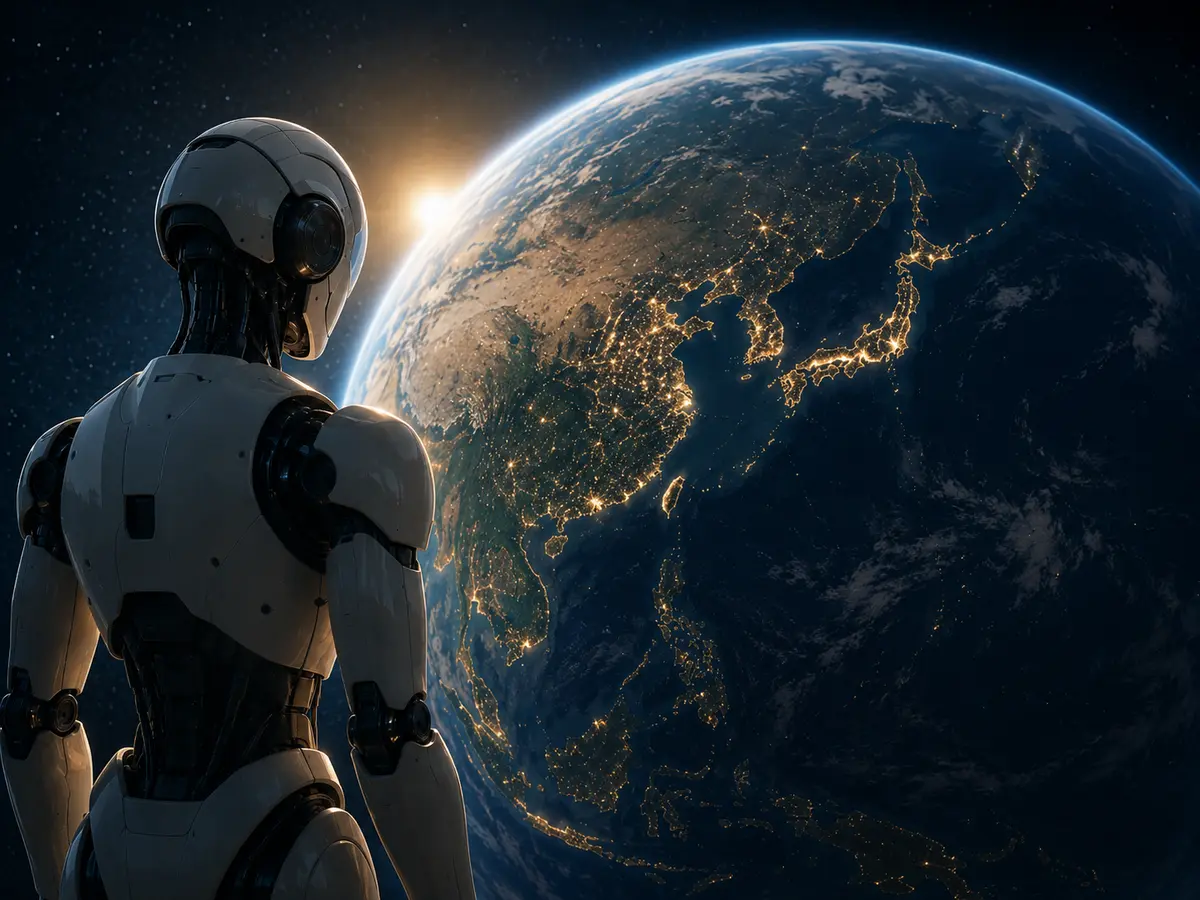
Correction, 2026-10-07
This article was corrected after a review of the sources behind a number of its statements. Each item below states what the page previously said and what it says now.
- Industrial shipments in the second quarter of 2026. Previously: Tesla's Optimus, Figure's Figure 03, and Apptronik's Apollo were all shipping units to industrial customers in the second quarter of 2026, "a first for the sector." Now: Figure reported in April 2026 that it had raised Figure 03 output to one robot per hour and had delivered more than 350 robots; Mercedes-Benz had a 2024 commercial agreement to pilot Apollo, and GXO's work with Apollo was an early-stage proof of concept; Tesla's Q2 2026 update listed its Optimus lines as under construction. The "first for the sector" claim has been removed.
- 2025 shipment volume. Previously: roughly 13,000 to 16,000 units shipped in 2025, a range that combined two different measurements. Now: roughly 13,000 units shipped in 2025 (Omdia) and a forecast of more than 50,000 shipments in 2026 (TrendForce).
- Market forecasts. Previously: estimates "for the mid-2030s" ranging from under $18 billion to $165 billion, with the Goldman Sachs estimate undated. Now: $17.8 billion by 2031 (Mordor Intelligence), $165.1 billion by 2034 (Fortune Business Insights), and Goldman Sachs's February 2024 estimate of $38 billion by 2035, which a press report in late August 2026 said the bank had raised to about $138 billion.
- Figure at BMW. Previously: Figure operated a 40-unit commercial fleet at BMW Group Plant Spartanburg, reportedly billing around $25 per robot-operating-hour, and its fleet handled sheet metal there. Neither the unit count nor the rate appears in BMW or Figure material, and both have been removed. The article previously cited for them does not contain either figure. Now: a Figure 02 pilot that ran for about ten to eleven months and ended in 2025, and a Figure 03 logistics-sequencing project that BMW announced in June 2026. Neither company had published a unit count for the site or disclosed commercial terms.
- Optimus pricing and production. Previously: Tesla was "targeting $20,000 to $30,000 pricing at scale," and Elon Musk had acknowledged that current units mostly gathered training data. Now: Musk said in October 2024 that buyers should eventually be able to purchase an Optimus for about $20,000 to $30,000, and in November 2025 that production cost would probably be around $20,000 once output reached about one million units a year; Tesla had announced no price. The Fremont conversion and training-data points are now attributed to Tesla's Q2 2026 update.
- Harmonic-drive lead times. Previously: harmonic-drive lead times were "already at 26 weeks." The claim traced only to secondary web content that showed no sourcing of its own, and has been removed. Now: Harmonic Drive Systems said in August 2026 that, apart from large orders, it generally received delivery requests of about three to four months and was able to meet them; the figure was not specific to robots.
- UBTech. Previously: UBTech claimed the first 1,000+ industrial humanoid deliveries globally, including an Airbus agreement. Now: Airbus said its cooperation with UBTech was in the early concept-testing stage. The 1,000+ delivery figure has been removed; the page's description of it as a UBTech delivery claim could not be confirmed.
- Enabling technologies and the dexterity timeline. Previously: solid-state batteries doubling runtime by 2027 to 2029, actuator costs falling 30 to 50% by 2028 to 2030, human-level dexterity by 2028 to 2032, and battery life of around two hours per charge. The three forecasts had no source that could be checked and have been removed. Now: TrendForce reported that most humanoids ran for two to four hours per charge, and a POSCO Group report said all-solid-state batteries were expected to reach initial mass production and pilot production around 2027, with full-scale commercial production likely only after 2030.
- Speech-interface prediction. Previously: attributed to 1X CEO Bernt Børnich. Now: attributed to Figure CEO Brett Adcock, as in the cited source.
- MIT CSAIL. Previously: a quotation attributing the words "lack common sense" to MIT CSAIL's leadership. Those words could not be found as a quotation. Now: a paraphrase of a May 2026 statement by MIT CSAIL director Daniela Rus.
- US warehouse vacancies. Previously: the US warehousing sector reported roughly 500,000 unfilled positions in early 2026. The claim traced only to secondary web content that showed no sourcing of its own, and has been removed.
- South Korea's robot tax. Previously: presented, alongside UBI proposals, as a policy experiment already underway. Now: dated to the South Korean government's August 2017 proposal to cut a tax deduction for investment in automation equipment. The statement about UBI proposals has been removed.
- 1X NEO pre-orders. Previously: "more than 10,000 pre-orders." Now: 1X said in April 2026 that it had booked 10,000 NEOs in five days.
- 1X NEO deliveries. Previously: US deliveries starting in 2026, and in the FAQ, "Beta deliveries began in 2026." Now: 1X promised first deliveries in 2026.
- Other removed statements. The statement that real factory revenue was flowing, the Unitree G1 price of around $16,000 in the body and a matching "around $16,000" starting price for Chinese research platforms in the FAQ, the statements about Figure's in-house Helix model and UBTech's Thinker model, the statement that fine manipulation remained unsolved, a 2028 to 2030 budgeting window, the statements that Optimus moved battery components inside Tesla's factories and that Apollo moved totes at Mercedes-Benz pilots, the $100,000 to $300,000 price range for Western industrial platforms, the statement that robot-hours billed in factories were moving in one direction, the description of China as the price leader, a statement about the funding sources disclosed in Unitree's IPO filings, a statement about US legislators' views on Chinese-made units, and the description of a Chinese national humanoid standards system released in early 2026 as the world's first were removed because they could not be confirmed from the sources cited for them.
Several other citations were replaced with primary sources without changing the claims they support.
Key Takeaways
- Humanoid robotics crossed from prototype to commercial production in 2025 to 2026: Omdia counted roughly 13,000 units shipped worldwide in 2025, and TrendForce forecast more than 50,000 shipments in 2026.
- The human-machine interface (HMI) is the industry's decisive battleground: speech, gesture, and vision are replacing programming pendants and control panels.
- Physical AI, intelligence that perceives and acts in the physical world, is the engine behind those interfaces and the reason humanoids are outgrowing repetitive factory work.
- China leads in units shipped, backed by more than $20 billion in state support for the robotics industry; the US leads in AI software and is moving to wall off its market from Chinese hardware.
- 1X promised first deliveries of its NEO home robot to US homes in 2026. Early-adopter households are credible 2028 to 2032. True mainstream adoption is most realistically a 2030s story.
An Industry That Just Became Real
A humanoid robot is built with a human form factor (torso, head, arms, and usually legs) so it can operate in spaces designed for people, using the same stairs, tools, and workstations, without re-engineering the environment. The intelligence inside now has an industry-standard name: physical AI, artificial intelligence that perceives, reasons about, and acts in the physical world rather than only processing text on a screen. Humanoids are physical AI's most ambitious expression. For two decades that was a research curiosity. It no longer is. By mid-2026 the leading Western programs stood at different stages. Figure AI reported on April 29, 2026 that it had raised output at its BotQ factory from one Figure 03 per day to one per hour and had delivered more than 350 third-generation robots (Figure AI, April 2026). Apptronik listed Mercedes-Benz and GXO Logistics among its partners (Apptronik, February 2026). Mercedes-Benz had signed a commercial agreement in 2024 to pilot Apollo in its plants, and GXO's work with Apollo was an early-stage R&D proof of concept (Apptronik, March 2024; GXO, June 2024). Tesla had not begun Optimus production as of its Q2 2026 update. The update listed both the California and Texas Optimus lines as under construction, said Tesla expected to start production soon, and stated that initial builds "will be used in our Optimus Academy for training data collection and further functionality development" (Tesla, July 2026).
Market forecasts were still wildly divergent in 2026. Mordor Intelligence put the market at $17.8 billion by 2031 and Fortune Business Insights at $165.1 billion by 2034 (Mordor Intelligence, 2026; Fortune Business Insights, September 2026). Goldman Sachs estimated $38 billion by 2035 in February 2024 (Goldman Sachs, February 2024); a press report in late August 2026 said the bank had raised that estimate to about $138 billion (Investing.com, August 2026). The estimates use different end years and scope definitions, which is part of why they look so far apart. Nobody knows yet whether this becomes a smartphone-scale platform or a niche industrial tool. What is verifiable is unit volume: Omdia counted roughly 13,000 humanoids shipped worldwide in 2025 (Omdia via Robotics & Automation News, January 2026), and TrendForce forecast more than 50,000 shipments in 2026 (TrendForce, January 2026). The practical advice for planners: ignore any single analyst's number and track observable milestones instead, such as published delivery counts, production rates, and battery runtime.
Why the human form factor at all? Because the built world assumes a human body. A traditional robot arm requires a cell engineered around it; a humanoid, at least in principle, walks into the same space a human worker occupied yesterday and picks up the same tote. That single design decision is what has attracted capital at a pace few hardware sectors have ever seen.
The HMI Revolution: The Robot Body Becomes the Interface
For seventy years, the human-machine interface for robotics meant teach pendants and control panels operated by trained specialists. The humanoid era inverts this, and the HMI shift may matter more than the hardware.
Speech is becoming the operating system. Figure CEO Brett Adcock predicted that the operational interface for humanoids would be speech, with large language models translating requests into robot commands, functionality that Figure, Tesla, 1X, and Agility Robotics had all demonstrated (The Robot Report, October 2025). 1X said its NEO home robot would ship with a speech interface that knew when it was being addressed, vision that recognized context (ingredients on a counter, for instance), and persistent memory across conversations. The training cost of operating a robot is collapsing toward zero because the interface is the one every human already knows.
The frontier extends further: multimodal systems fusing voice, gesture, and gaze (Frontiers in Neurorobotics, 2023); accessibility interfaces that let users with motor disabilities command a home humanoid through eye movement and head rotation at 99% accuracy (Applied Bionics and Biomechanics, 2022); and, in Shenzhen, UBTech's UWORLD U1 companion robot with biomimetic skin and an emotion-aware language model the company claims identifies more than 20 emotional states at over 90% accuracy (manufacturer claim, not independently verified) (Interesting Engineering, July 2026). The direction is unambiguous: the interface is no longer a layer between human and machine. The entire robot body, from voice to posture, has become the interface. And since mechanical hardware is commoditizing fast while the interaction layer is not, HMI is where the competitive moat is being dug. These interfaces are not an HMI story alone: they are what physical AI looks like from the user's side.
The Physical AI Leap: From Repetitive Tasks to "Much, Much More"
In 2026, deployed humanoids still did narrow, repetitive work. At BMW Group Plant Spartanburg, a Figure 02 loaded sheet-metal parts for welding in a pilot that ended in 2025, and in June 2026 BMW announced a Figure 03 project in logistics sequencing (Figure AI, November 2025; BMW Group PressClub, June 2026). The technology that changes this is the vision-language-action (VLA) model, the engine of physical AI: a single neural network taking in camera vision and natural language and outputting motor commands, the robotics equivalent of ChatGPT's leap for text. NVIDIA supplied simulation, foundation models, and robot compute to both sides of the Pacific (USCC, 2024).
The plausible capability path: scripted labor today; instructed generalists that accept spoken task lists by 2026 to 2029; contextual workers with memory, judgment, and cross-domain skill transfer in the 2030s; and, speculatively, machines that participate in planning rather than just execution. The honest caveat: MIT CSAIL director Daniela Rus said in May 2026 that robots still had a gap in common-sense reasoning (Automate.org, May 2026). But the constraint is no longer mechanical. It is data and compute, and those curves bend fast.
The US and Allies vs. China
The US leads in the AI stack and high-value deployments. A Figure 02 pilot at BMW Group Plant Spartanburg ran for roughly ten to eleven months, logging around 1,250 operating hours, moving more than 90,000 components, and supporting production of more than 30,000 BMW X3 vehicles; it ended in 2025. In June 2026 BMW announced a Figure 03 project in logistics sequencing at the plant. As of September 2026, neither company had published a unit count for the site, and neither had disclosed commercial terms (BMW Group PressClub T0455864EN, February 2026, and T0458778EN, June 2026; Figure AI, November 2025). Tesla had decommissioned its Model S and X lines at Fremont and was installing first-generation Optimus lines there, and it said the initial Optimus builds would be used for training data collection (Tesla, July 2026). Musk said in October 2024 that buyers should eventually be able to purchase an Optimus for about $20,000 to $30,000, and in November 2025 that production cost would probably be around $20,000 once output reached about one million units a year. Tesla had announced no price (TechCrunch, October 2024; Tesla annual shareholder meeting, November 2025). Apptronik said in February 2026 that it had closed a Series A of more than $935 million (Apptronik, February 2026); Agility had signed a multi-year robots-as-a-service agreement with GXO in June 2024 (GXO, June 2024); 1X was targeting the consumer market.
The allies hold the choke points. Japan, South Korea, and Germany control the precision components (harmonic drives, reducers, sensors) that every humanoid on Earth requires (FDD, March 2026). On August 7, 2026, Harmonic Drive Systems Inc., a Japanese maker of strain wave gears, said that, apart from large orders, it generally received requests for delivery in about three to four months and was able to fulfill them. The large orders it set aside were medical-device orders, European aviation and aerospace orders with lead times of six months or more, and a robot maker's bulk order. The figure was not robot-specific (Harmonic Drive Systems, Q1 FY3/2027 results briefing transcript, August 2026). Hyundai took full ownership of Boston Dynamics; Samsung became the largest shareholder in Rainbow Robotics. Japan, with 29% of its population over 65, treats humanoids as demographic necessity rather than export play.
China leads in scale. Beijing's 2023 MIIT policy targeted a world-class humanoid ecosystem by 2025 and supply-chain integration by 2027, backed by more than $20 billion in state support for the robotics industry and by state procurement to seed demand (USCC, 2024; CSIS ChinaPower, April 2026). Airbus said its cooperation with UBTech was in the early concept-testing stage (Reuters, January 2026).
The collision is already legislative. The GUARD Act, introduced in June 2026, would, if enacted, review adversary-produced robots and ban risky units from the US market via the FCC's Covered List (House Select Committee on the CCP, June 2026). Western firms should plan for a bifurcated market: allied-supply-chain robots for anything sensitive, Chinese hardware confined at most to isolated R&D sandboxes.
When Do Humanoids Reach Households?
The direct answer: the first consumer home robots were promised for US delivery in 2026; a real early-adopter market is credible 2028 to 2032; mainstream household adoption is most realistically a 2030s-and-beyond outcome.
The pivotal product is 1X's NEO: $20,000 or $499 per month, with first deliveries to US homes promised for 2026 (The Robot Report, October 2025). 1X said in April 2026 that it had booked out its production capacity for the next year, 10,000 NEOs, in five days, and that some buyers would receive their NEO in 2026 and others later (1X, April 2026). 1X said NEO would fold laundry, organize shelves, and tidy, and that for chores it did not yet know, owners could schedule a 1X teleoperator to guide it (The Robot Report, October 2025). The first home robots are hybrids: part autonomous machine, part remotely assisted service, part data-collection platform training their successors.
Industry practitioners clustered around 2030 for meaningful household presence, likely via robot-as-a-service leasing (R&D World, October 2025). The enabling technologies were still early: TrendForce reported that most humanoids ran for only two to four hours per charge, and a POSCO Group report said all-solid-state batteries were expected to reach initial mass production and pilot production around 2027, with full-scale commercial production likely only after 2030 (TrendForce, January 2026; POSCO Newsroom, April 2026). The sober counterweight: Morgan Stanley modeled only about 10% of US households owning a humanoid by 2050 (Morgan Stanley, May 2025). Four gates control the timeline: autonomy in unstructured homes, fine dexterity, battery life (two to four hours per charge for most humanoids), and safety standards for general-purpose home humanoids.
Benefits and Dilemmas
The benefits are concrete. The strongest case is labor where there are no workers: Japan's working-age population was shrinking by about 590,000 people a year (CNRS-AIST, 2024). Add eldercare for aging societies, removal of humans from dangerous work, reshoring economics, and independence for people the labor market underserves.
The dilemmas are equally concrete. Job displacement is real but asymmetric: in labor-short economies humanoids fill vacancies; in labor-surplus economies they displace. Policy responses have been tried: in August 2017 South Korea's government proposed cutting its tax deduction for investment in automation equipment by up to two percentage points, a step Korean press described as a first move toward a "robot tax" (The Korea Times, August 2017). Privacy is acute: a home humanoid is a mobile sensor array with persistent memory, and early models explicitly include remote human operators seeing inside your home. Safety is contextual, not intrinsic; a compliant robot holding a knife near a toddler is still a hazard. And companionship robots that comfort millions of isolated seniors raise unresolved questions about emotional dependency, deception of cognitively impaired users, and who can afford care at all (PMC, 2024).
What This Means for Cross-Border Business
The near-term money is not in buying robots. It is in the value chain forming around them. Component suppliers are the quiet winners, and mid-sized Japanese precision manufacturers, including those facing succession decisions, hold capabilities the humanoid industry will spend a decade bidding for. Meanwhile, the bifurcating US-China market turns supply-chain provenance and compliance mapping into a service category that barely exists yet. For most SMEs, the rational posture is milestone-based: deploy proven automation now, pilot a humanoid only where human-form adaptability genuinely matters, and budget seriously for the point when prices fall and reliability data matures.
Frequently Asked Questions
How much does a humanoid robot cost in 2026?
1X priced its NEO home robot at $20,000 or $499 per month. Tesla had announced no price for Optimus.
When will humanoids be common in homes?
1X promised first NEO deliveries in 2026; early adopters 2028 to 2032; mainstream most realistically in the 2030s and beyond.
Who leads, the US or China?
China in units and scale; the US in AI software and high-value deployments; Japan, Korea, and Germany control the precision components both need.
What is physical AI, and is it the same as HMI?
No. Physical AI is the intelligence: AI that perceives, reasons, and acts in the physical world through models like VLAs. HMI is the communication layer between human and robot. Physical AI is what made today's HMIs conversational.
Will humanoids take jobs?
In labor-short economies they mostly fill vacancies no human applies for; in labor-surplus contexts displacement is real, and policy responses have been proposed, such as South Korea's 2017 plan to cut a tax deduction for automation investment.
Pivot Co., Ltd. advises Japanese and American companies on cross-border market entry, distributor development, and industrial partnerships. If your business supplies precision components or machinery into this rapidly forming value chain, or needs to navigate the bifurcating US-China robotics landscape, contact our Ginza or Tennessee office.
Sources for the corrected passages are current as of September 2026; other sources are as of the original July 2026 publication. Figures flagged inline as manufacturer-claimed should be independently confirmed before use in investment decisions.
This article was corrected on 2026-10-07; see the note at the top.
Weighing a border? Start with a conversation.
Whether you are weighing a new market or already committed, we will give you a straight, honest read on the opportunity and how we can help.