A Shared Crisis: Energy Grids Across the Developed World
Key Takeaways
- Every grid in this report was built for one-directional power from large fossil plants. None of them was designed for distributed renewables, data-center demand, or extreme weather, and that mismatch is the shared failure.
- The United States and Australia carry the most acute near-term risk: the oldest assets, fast demand growth, and heavy exposure to imported control hardware.
- Japan's constraint is structural rather than technical. The 50Hz/60Hz split between eastern and western Japan limits emergency transfers, and no amount of new generation fixes it.
- Germany leads on renewable generation and lags on transmission. The power is generated in the north, the industry that needs it sits in the south, and the lines between them are the bottleneck.
- Cybersecurity and supply-chain origin are now grid-planning questions. Communication modules found embedded in imported inverters have pushed procurement toward domestic and allied sources.
A Shared Crisis Across the Developed World
The shared problem is architecture, not capacity. These grids were designed to move power in one direction from a few large plants, and almost every pressure now on them runs the other way.
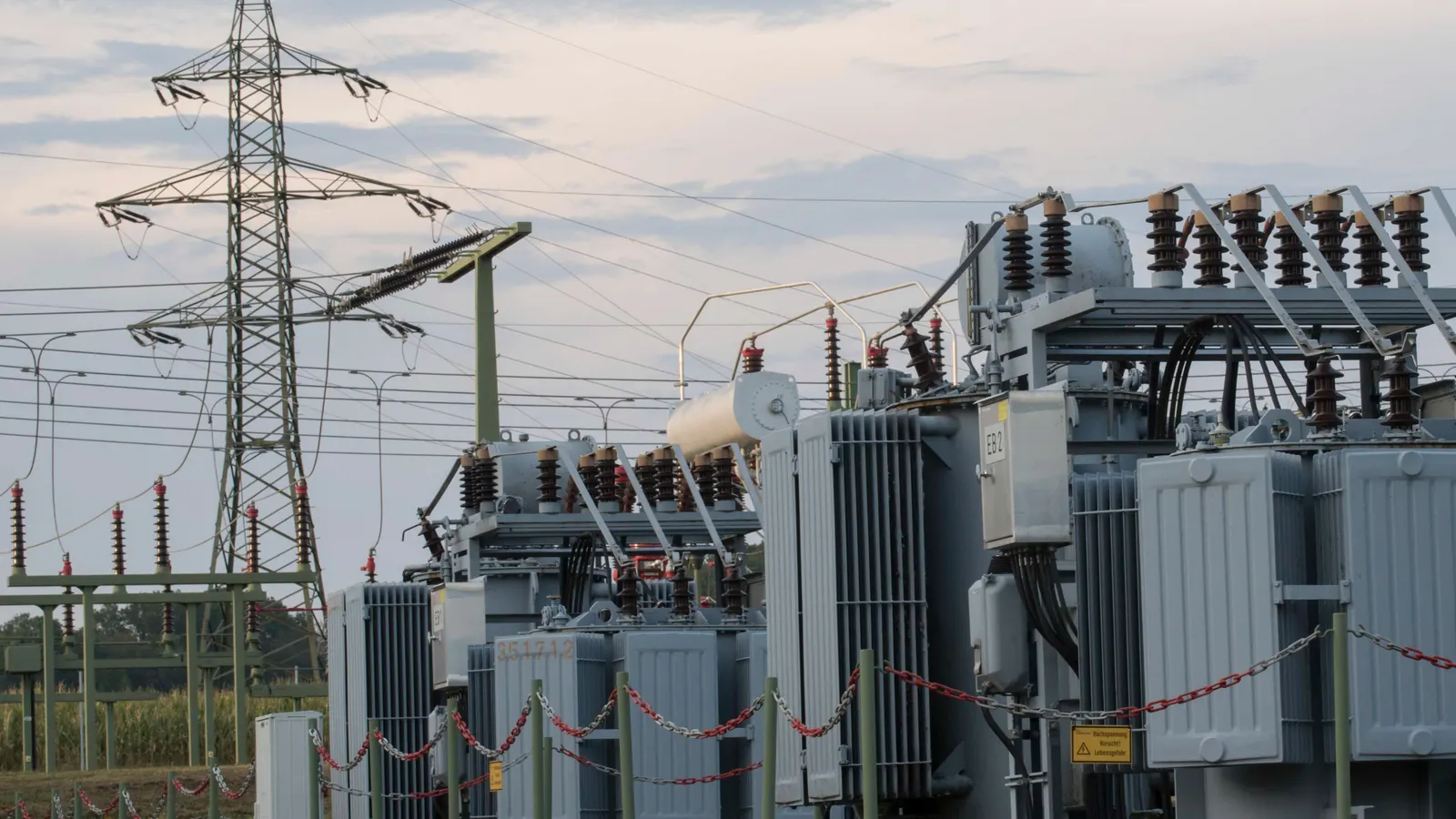
Across the developed world, energy grids are under intense pressure. Built for past generations, these vast networks of transmission lines, substations, and transformers are struggling to keep up with the demands of the 21st century. Increased electrification, climate-induced volatility, aging physical assets, and emerging cyber threats have created a convergence of risk that no industrialized country can ignore.
This report expands on previous analysis of the United States and Japan, offering a broader comparative view of energy systems in Germany, the United Kingdom, France, Australia, and South Korea. These nations differ in energy policy and geography, yet they share a common problem: legacy grid systems were not designed for the modern world.
United States: A Vast Network Under Growing Strain
The United States operates one of the largest and oldest energy grids in the world, divided into three primary interconnections: the Eastern, Western, and ERCOT systems. Much of the infrastructure, particularly high-voltage transformers and long-haul transmission corridors, dates back to the 1960s and 70s. These aging components are increasingly prone to failure, and demand has surged due to electric vehicle adoption, commercial electrification, and a growing reliance on energy-intensive data centers.
Cybersecurity risks have intensified. Investigations into imported solar inverters and battery systems uncovered embedded communication modules capable of remote manipulation. This has led to legislative action and a shift toward domestic or allied supply chains for critical infrastructure components. Modernization efforts are underway, including drone-based inspections, AI-assisted grid management, and the gradual rollout of distributed energy resources, but progress remains uneven across states.
Japan: Disaster Resilience, Fragmentation, and High Density
Japan faces a different but equally pressing set of challenges. Its power grid is fragmented by historical legacy, with eastern and western Japan operating at different frequencies. This limits energy transfers between regions during emergencies. Japan also faces frequent natural disasters that regularly damage transmission infrastructure.
After the 2011 Fukushima disaster, the country accelerated investment in renewables and grid automation. Japan has pioneered robotic inspection systems that travel along energized wires, using line power to operate autonomously. Integration of solar, wind, and energy storage continues to grow, but the absence of a fully unified grid architecture complicates nationwide load balancing and emergency response coordination.
Germany: Leading in Renewables, Lagging in Transmission
Germany's commitment to the Energiewende has made it a global leader in renewable generation. Wind and solar now supply a significant portion of the national grid, but the infrastructure needed to transport that power from generation zones in the north to industrial hubs in the south is lacking. Transmission bottlenecks have led to curtailments and inefficient energy distribution.
Public resistance to new overhead transmission lines, environmental permitting delays, and insufficient investment in digital control systems have all slowed progress. Germany's centralized grid model is now under pressure to evolve into a hybrid system capable of supporting localized energy clusters, battery storage, and real-time energy management.
United Kingdom: Transitioning Amid Post-Brexit Complexity
The United Kingdom has made significant progress in reducing carbon emissions through offshore wind expansion and coal plant decommissioning. However, the country's grid has struggled with instability and occasional outages. In 2019, a lightning strike triggered a cascading failure that affected over a million customers, revealing weaknesses in automatic fault isolation and load-shedding protocols.
Brexit weakened the UK's energy integration with continental Europe, making supply and demand balancing more difficult. The UK is racing to install smart meters, EV chargers, and heat pump systems, all of which place additional pressure on the distribution network. Aging substations and feeder lines are often not equipped to handle this new demand.
France: Nuclear Dependence and Structural Rigidity
France has long benefited from one of the most reliable and low-carbon grids in Europe due to its heavy reliance on nuclear energy. However, many of its nuclear plants are reaching end-of-life, and unplanned outages have increased in recent years. Extreme heatwaves have affected the cooling efficiency of certain facilities, raising operational uncertainties.
France's grid remains primarily centralized, with limited infrastructure for bi-directional energy flow. Smart grid technologies are still underdeveloped compared to neighboring countries. The government is exploring new nuclear builds alongside investments in green hydrogen and distributed energy networks.
Australia: A Grid at the Mercy of Climate Extremes
Australia's vast geography and climate volatility present unique challenges. The country's eastern grid has faced repeated crises due to bushfires, flooding, and supply-demand imbalances. In 2022, the national market operator was forced to suspend wholesale energy trading during a major supply shock.
Despite these issues, Australia is rapidly embracing decentralized solutions. Microgrids, especially in rural communities, are gaining popularity. Battery storage is scaling quickly, and there is broad support for renewable integration. However, much of the legacy infrastructure still relies on imported control systems, many sourced from China, raising concerns about cybersecurity and long-term resilience.
South Korea: Smart and Urban, But Resource-Constrained
South Korea has aggressively pursued smart grid development, with advanced metering infrastructure and AI-based demand response systems in place across much of the country. Its grid is technologically sophisticated, yet vulnerable to the constraints of high urban density and limited geographic flexibility.
Because so much demand is concentrated in metropolitan regions like Seoul, any disruption can affect millions of people. The country is investing in distributed storage and local solar, but rooftop space is limited. The government is actively seeking to diversify its technology suppliers and promote domestic manufacturing of critical components.
Shared Risks and Global Realignment
Across all these countries, the energy infrastructure story is increasingly shaped by common challenges. Legacy systems built for fossil fuel plants and one-directional power flows are ill-suited to the era of distributed renewables, data center-driven demand, and extreme weather.
Cybersecurity and supply chain integrity now sit at the center of infrastructure planning. Countries are re-evaluating their dependence on foreign-made hardware, particularly in the context of suspected vulnerabilities in imported systems. National security concerns are driving new procurement standards, investment in domestic production, and international collaboration on digital infrastructure safeguards.
The grid is now a frontline system, essential to economic stability, national defense, and environmental stewardship. Its modernization is not just a technical challenge but a strategic imperative.
Frequently Asked Questions
Q: Which developed countries face the most severe energy grid challenges?
The United States and Australia face the most acute near-term risks due to the combination of aging infrastructure, climate-driven demand spikes, and cybersecurity vulnerabilities. Germany faces structural transmission bottlenecks despite leading in renewable generation. Japan's frequency divide and disaster exposure present ongoing resilience challenges unique to its geography.
Q: What do all developed nations have in common regarding grid infrastructure?
All face the same fundamental mismatch: legacy grid systems designed for one-directional fossil fuel power delivery are being asked to manage bi-directional renewable energy flows, surging electrification demand, and sophisticated cyber threats. The pace of modernization varies, but the underlying structural challenge is shared across every developed nation.
Q: Why is cybersecurity now a central concern for energy grids?
Investigations across multiple countries have uncovered undocumented communication modules embedded in imported grid hardware, particularly solar inverters and battery storage systems. These components have been found capable of remote manipulation, prompting the U.S., UK, and others to legislate against foreign-made critical infrastructure components.
Q: What is the Energiewende and why has it created grid problems for Germany?
The Energiewende is Germany's national energy transition policy committing the country to renewable generation targets. While successful in expanding wind and solar capacity, it exposed a critical gap: transmission infrastructure capable of moving power from generation zones in northern Germany to industrial demand centers in the south was never built at sufficient scale, resulting in chronic transmission bottlenecks.
Q: How does Australia's grid crisis differ from those in Europe and Asia?
Australia's challenges are driven primarily by geographic scale and climate extremes rather than aging urban infrastructure. Its vast, sparsely populated regions make centralized grid management inherently fragile. The country's rapid adoption of microgrids, distributed battery storage, and community energy systems represents arguably the most aggressive decentralization effort among developed nations.
Is your energy technology ready for international markets? Pivot Global Solutions helps technology companies in the energy and infrastructure sector navigate cross-border market entry, from regulatory alignment to go-to-market strategy in Japan, the U.S., and beyond.
Weighing a border? Start with a conversation.
Whether you are weighing a new market or already committed, we will give you a straight, honest read on the opportunity and how we can help.